Getting Your Roof Ready Before Central Texas Hail Season
Plenox Solutions · Leander, TX · Roofing
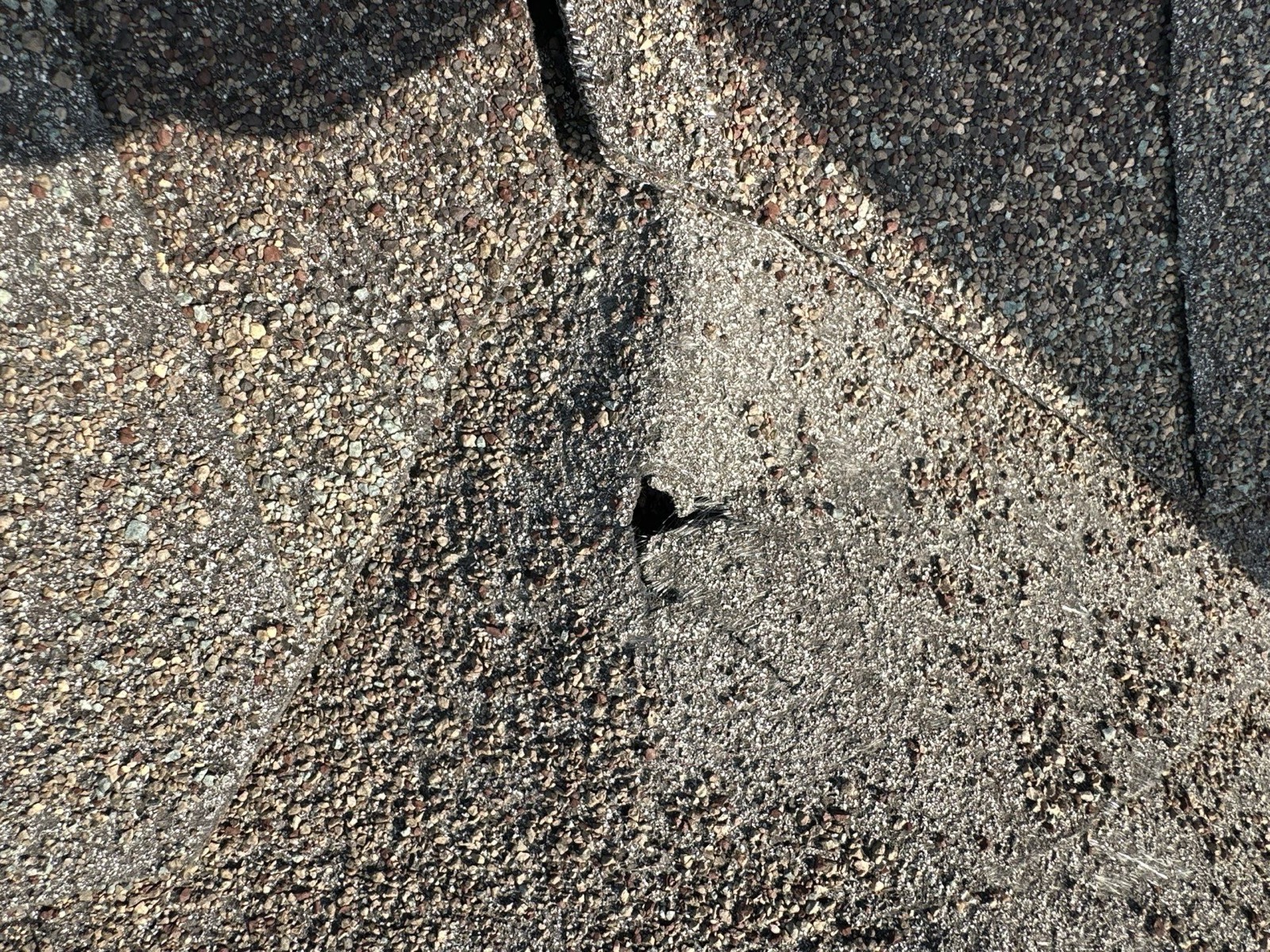
March through June is the period when Central Texas sees the most hail activity. Williamson County sits in the corridor where Gulf moisture and dry plains air collide, producing the conditions that generate large hail, sometimes golf ball size or bigger, with very little warning. The time to address your roof is before that happens, not after you are standing in your attic with a bucket.
What Makes Central Texas Hail Different
The hail events that hit the Austin metro and Williamson County are not the light scattering you see in other parts of the country. A severe storm cell in spring can drop golf ball or baseball-sized stones in a narrow swath, hit one block hard and leave the next one untouched, and be gone in under twenty minutes. Insurance adjusters are familiar with this pattern. What they are also familiar with is pre-existing wear that was not caused by the hail event but gets attributed to it during a claim inspection. Roofs with existing granule loss, cracked or lifting shingles, and deteriorated flashing tend to have more contested claims than roofs that were in documented good condition before the event. Getting an inspection and addressing any open maintenance items before storm season is the most straightforward way to protect your claim position.
A Pre-Season Roof Inspection Covers These Areas
- Shingle condition. Granule loss is the first sign of end-of-life on a shingle roof. Granules protect the underlying asphalt from UV degradation. A roof that has been shedding granules for a few years is more vulnerable to hail impact and more likely to be damaged in a way that requires full replacement rather than spot repair.
- Flashing at penetrations and transitions. The points where your roof meets a wall, chimney, or skylight, and the valley intersections where two roof planes meet, are the highest-risk locations for water intrusion. Flashing that is lifting, cracked, or improperly sealed is a leak waiting to happen with or without a storm.
- Gutters and downspouts. Full gutters cannot move storm water. During a heavy Central Texas rain event, blocked gutters overflow at the fascia, force water back under the drip edge, and saturate the fascia board. This damage is not covered as storm damage because it is a maintenance failure.
- Ridge caps and hip caps. These are the highest-exposure shingles on the roof. They degrade faster than field shingles and are the most likely to show damage after a storm.
- Attic ventilation. Summer heat in Central Texas combined with an under-ventilated attic bakes asphalt shingles from below. Adequate ventilation is not a comfort issue alone. It is a shingle lifespan issue, and a hot deck makes the shingle more brittle and more likely to fracture when hail hits it.
“The roofs that come through a claim clean are the ones that were already in documented good shape before the storm. Pre-existing wear is what adjusters use to cut a settlement.”
What to Do If You Find Problems
If a pre-season inspection turns up open maintenance items, addressing them before the first major storm of the season is worth it for several reasons. First, minor repairs are inexpensive now and expensive after storm demand floods the market with everyone wanting their roof fixed at the same time. After a major hail event hits Leander or Round Rock, the wait for a reputable crew can stretch into months, and material lead times stretch with it. Second, a documented repair record strengthens your insurance claim if damage occurs afterward, because it establishes the condition of the roof before the loss. Third, a roof in good condition tends to perform better in a storm than one that already had weakened areas where granule loss or lifting shingles gave the hail an easier target.
The order of operations matters here. Get the roof reviewed, fix the small items, keep the paperwork, and then you are in a defensible position if a storm rolls through in April. Doing it the other way around, waiting for damage and then trying to establish that the roof was fine beforehand, puts you on the back foot in every conversation with an adjuster.
What a Williamson County Hail Storm Looks Like in Practice
Hail in this part of Texas tends to arrive with a fast-moving supercell, usually in the late afternoon or early evening when the daytime heat has built enough instability in the atmosphere. The storms that produce damaging hail often carry strong straight-line winds at the same time, which is why a single event frequently leaves both hail bruising on the field shingles and wind-lifted or torn shingles at the ridges and edges. The damage is rarely uniform across a neighborhood. We have inspected homes where one side of a Cedar Park cul-de-sac had clear baseball-sized impact marks and the homes directly across the street showed almost nothing, because the hail core tracked down one side of the street.
This is why a ground-level guess is unreliable. The only way to know whether your specific roof took damage is to have someone qualified walk it and document what is there. A roof that looks fine from the driveway can have a field of bruised shingles that will start leaking in two or three years as UV breaks down the exposed asphalt at each impact point. That delayed failure is the worst case, because by the time the leak appears the insurance filing window for the original storm may have closed.
Document Your Roof Before the Season, Not After
The cheapest insurance-claim preparation available to a Williamson County homeowner is a set of dated photographs taken on a clear day in February. Walk the property and photograph each roof elevation from the ground, the gutters and downspouts, the soft metals like vents and AC fins, and any trim or fencing that hail would mark. If you have a recent inspection report from a roofer, keep it with the photos. None of this takes an hour, and it establishes a documented before condition that no adjuster can argue with. When a May storm drops hail across your neighborhood, the difference between your photos from February and the adjuster’s photos from June is the storm, full stop.
Keep your paperwork in the same folder. Receipts for any repairs, the invoice from your last roof replacement if you have it, and notes on the shingle product that is on the house. Insurance carriers ask for the age of the roof on nearly every claim, and homeowners who cannot answer it accurately start the process at a disadvantage. If you bought the house without records, an inspection report that states the apparent age and condition of the roof fills that gap. We write that age and condition assessment into every inspection we do for exactly this reason. It costs nothing extra and it has settled more than one adjuster dispute before it started.
After a Hail Event
If your neighborhood takes a hit, walk your property and look for obvious signs: dents on soft metal surfaces (vents, flashing, gutters, AC fins), bruising or granule craters on shingles visible from the edge of the roof, broken window screens, and damage to any soft wood trim. These are useful documentation points. Call us for a professional inspection before contacting your insurance company. A contractor who inspects first can describe the damage accurately and help you understand whether a claim is warranted. Calling insurance first and having an adjuster visit without any contractor documentation often leads to underpayment or denial. See our storm restoration page and hail damage repair page for what comes next.
Plenox Solutions provides pre-season roof inspections for homeowners in Leander, Cedar Park, Georgetown, Round Rock, and across Williamson County. Call (432) 288-5562 or reach us at our contact page to schedule.
Call (432) 288-5562 Schedule InspectionSee our project gallery for examples of storm damage repair and full reroof work across Central Texas.