Flat Roof Maintenance in Central Texas: What Gets Skipped and Why It Matters
Plenox Solutions · Leander, TX · Commercial Roofing
Flat roofs get neglected because they are out of sight. Unlike a steep-slope residential roof where damage can sometimes be seen from the street or the backyard, a flat commercial roof requires someone to actually walk it to see what is happening. Most building owners and property managers in the Austin metro do not have a regular inspection protocol, which means problems accumulate silently until water appears at the ceiling. By that point, the repair cost is significantly higher than it would have been at first detection.
What Central Texas Does to Flat Roofs
The UV intensity and temperature range in Central Texas are hard on flat roofing membranes. A TPO or modified bitumen membrane on a Cedar Park commercial building sees surface temperatures above 170 degrees Fahrenheit on a July afternoon. That thermal cycling, hot in summer and cold enough to freeze on some winter nights, causes the membrane to expand and contract repeatedly. Over years, this stresses seams, penetration flashings, and termination bars. The membrane itself does not typically fail from a single event. It fails from thousands of low-grade stress cycles that eventually find a weak point.
The Most Common Flat Roof Failures We See
- Seam separation. Heat-welded TPO seams or lapped modified bitumen seams pull apart at their weakest points under repeated thermal cycling. A seam failure does not cause an immediate catastrophic leak. It creates a path that lets water in gradually during heavy rain events.
- Ponding water. Flat roofs are designed with slight slope toward drains, but drains get clogged, scuppers get blocked, and organic debris builds up. Standing water on a flat roof for more than 48 hours after a rain event indicates a drainage problem. Ponding water accelerates membrane degradation and adds weight load that was not designed into the structure.
- Penetration flashing failures. HVAC equipment, pipe penetrations, and conduit runs through a flat roof require careful flashing. As sealants age and membranes move, the flashing detail at each penetration is where water finds its way in. These are the first areas we inspect.
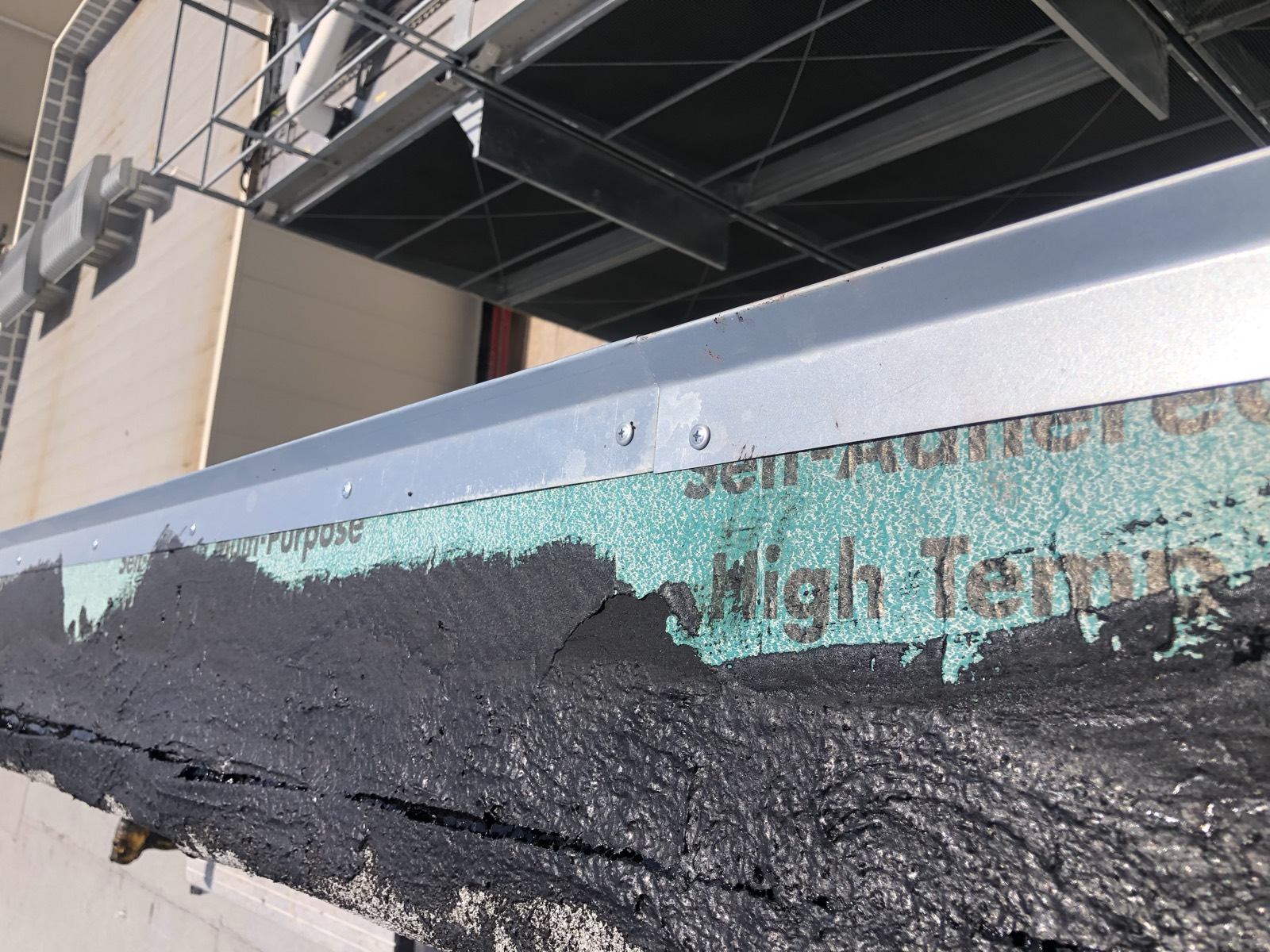
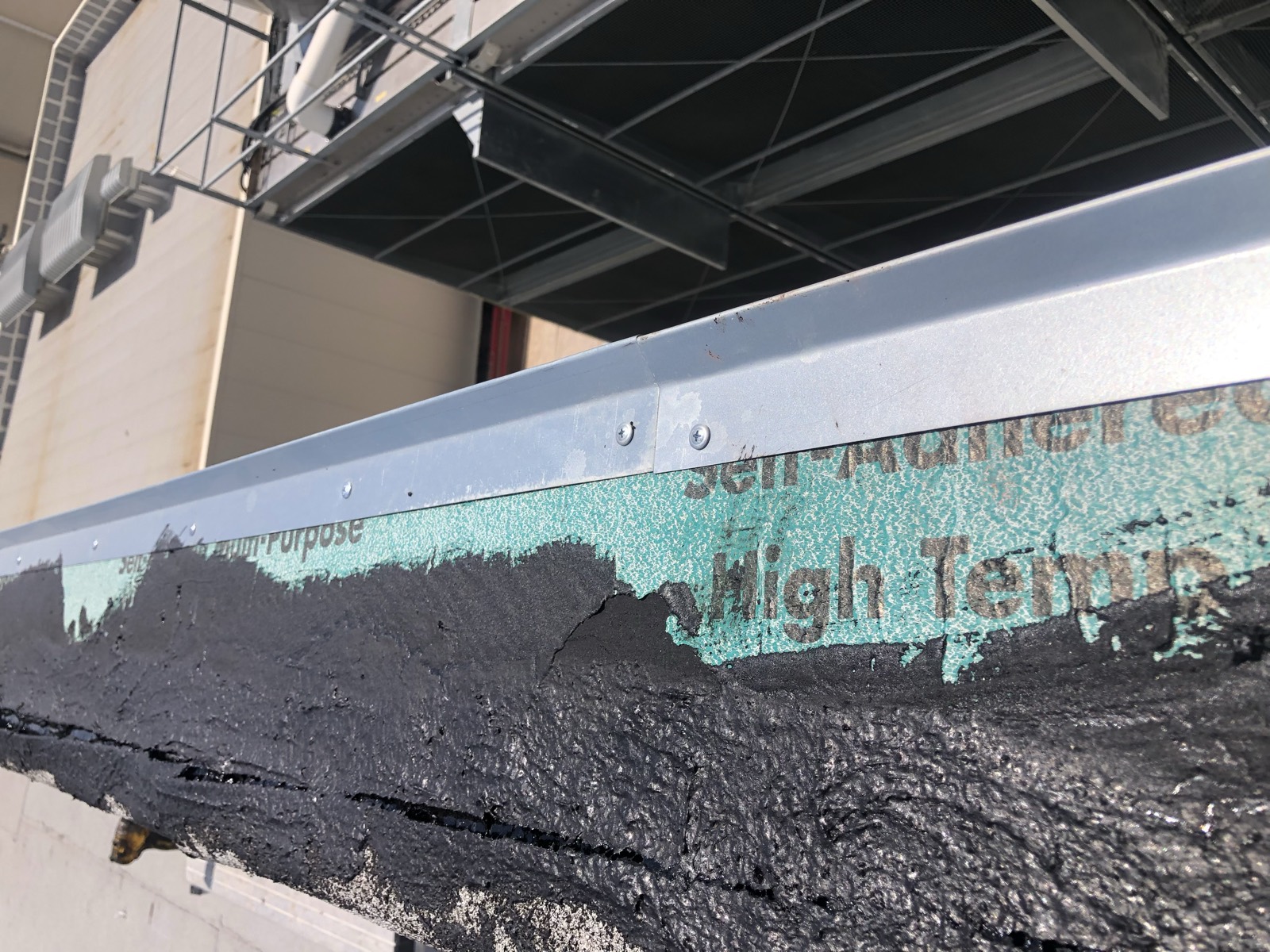
- Termination and parapet flashing. The point where the roof membrane terminates against a parapet wall or a curb is a high-stress location. Improper termination, failed caulk, or lifting metal cap flashing allows water to run behind the membrane from the top rather than through it.
“A flat roof does not announce that it is failing. By the time water shows up at the ceiling tile, the deck and insulation above it have usually been wet for months.”
What a Proper Maintenance Schedule Looks Like
For a commercial flat roof in Central Texas, twice-yearly inspection is the baseline: spring before storm season, fall after the summer heat load has done its work. Each inspection should include walking the full membrane surface, clearing all drains and scuppers, inspecting all penetration flashings, checking the termination details at all parapet and curb edges, and documenting any areas showing wear before they become leaks. Minor repairs caught at inspection cost a few hundred dollars. The same issue found after it has been leaking into the deck and insulation costs many thousands.
TPO vs Modified Bitumen in This Climate
Both work in Central Texas. TPO is the current industry standard for new commercial flat roofing. It has better UV resistance than older membranes, the heat-welded seams are strong when properly installed, and it is reflective for a cooler roof surface. Modified bitumen is still widely used on re-roofing projects and commercial buildings that want a more familiar material for maintenance crews. The specific product within each type matters more than the category. A quality TPO installation beats a budget modified bitumen installation in any climate.
Why Documentation Is Part of Maintenance
A maintenance program is only worth what gets recorded. When we inspect a commercial flat roof, we document the condition of every seam run, every penetration, and every termination detail, with photos and locations noted against a roof plan. That record does two things for a building owner. First, it gives you a year-over-year baseline, so a small area of seam separation that was noted last spring and has grown by this fall gets caught as a trend rather than as a surprise leak. Second, it supports your position with a manufacturer or an insurer. Most NDL manufacturer warranties on commercial membranes require evidence of regular maintenance, and a claim can be denied if the building owner cannot show the roof was being looked after. A clogged drain that caused ponding and accelerated membrane breakdown is treated as a maintenance failure, not a covered loss, and the documentation is what separates the two.
For a property manager handling multiple buildings across the Austin metro, this record-keeping also makes budgeting honest. A roof tracked over several inspection cycles tells you with reasonable confidence how many years it has left, which lets you plan a replacement on your schedule and your budget rather than reacting to an emergency leak in the middle of a tenant’s operating hours. The buildings that get into expensive trouble are almost always the ones with no inspection history at all, where the first real data point about the roof’s condition is water on the floor.
What You Can Check Without Getting on the Roof
Building owners and property managers do not need to walk the membrane themselves to keep a useful eye on a flat roof between professional inspections. The interior tells you a lot. Walk the top-floor ceiling grid quarterly and look for new staining, sagging tiles, or musty smell near HVAC drops, and check the underside of the deck in any accessible mechanical or storage areas. Outside, watch what the drainage does during and right after a hard rain: scuppers and downspouts that run strong during the storm and go quiet within an hour suggest the drains are open, while a downspout that barely flows during heavy rain usually means something is blocked up top. After any hail or high-wind event that comes through Cedar Park or Round Rock, look along the roof edge from the ground for displaced cap metal or membrane visible above the parapet line.
The other habit worth building is coordination with your HVAC contractor. Most flat roof punctures we trace on commercial buildings in this market came from service techs dragging tools or panels across the membrane, dropped screws that get walked into the surface, and condensate lines repositioned without a pad. Requiring rooftop service visits to be logged gives you a date to work from when a leak shows up under a unit three months later.
Scheduling Maintenance Around Central Texas Seasons
The calendar matters more on a flat roof than people expect, because the two inspection windows that work in Central Texas line up with the two stresses that actually damage the membrane. The fall window, roughly October into November, comes right after the summer heat load has finished cooking the roof. That is when seam separation, blistering, and UV-driven membrane fatigue are most likely to have opened up, so a fall walk catches the damage from the worst part of the year while the weather is mild enough to do quality repair work. It also clears drains and scuppers ahead of the cooler, wetter months when a clogged drain turns into ponding fast.
The spring window, late February through March, gets you ahead of hail and storm season. Williamson County’s most active hail months run from March into May, and a flat roof that goes into that stretch with sound seams, clear drains, and tight penetration flashings comes through it far better than one carrying open problems. Spring also gives you a documented baseline right before the storms, which matters if you end up filing a claim later. Trying to inspect in July or August is the mistake we see most: surface temperatures push past 170 degrees, crews can only stay on the membrane for short stretches, and any repair adhesive or sealant applied in that heat is working against you. Book the fall and spring slots and the rest of the year takes care of itself.
Plenox Solutions provides flat roof inspection, repair, and replacement for commercial and industrial properties in Leander, Cedar Park, Georgetown, and across Williamson County. See our flat roofing page and commercial roofing page. Call (432) 288-5562 or contact us. See our project gallery for flat roof work.
Call (432) 288-5562 Schedule Inspection