TPO vs Modified Bitumen for Central Texas Commercial Roofs
Plenox Solutions | Leander, TX | Commercial roofing contractor serving Austin metro and beyond
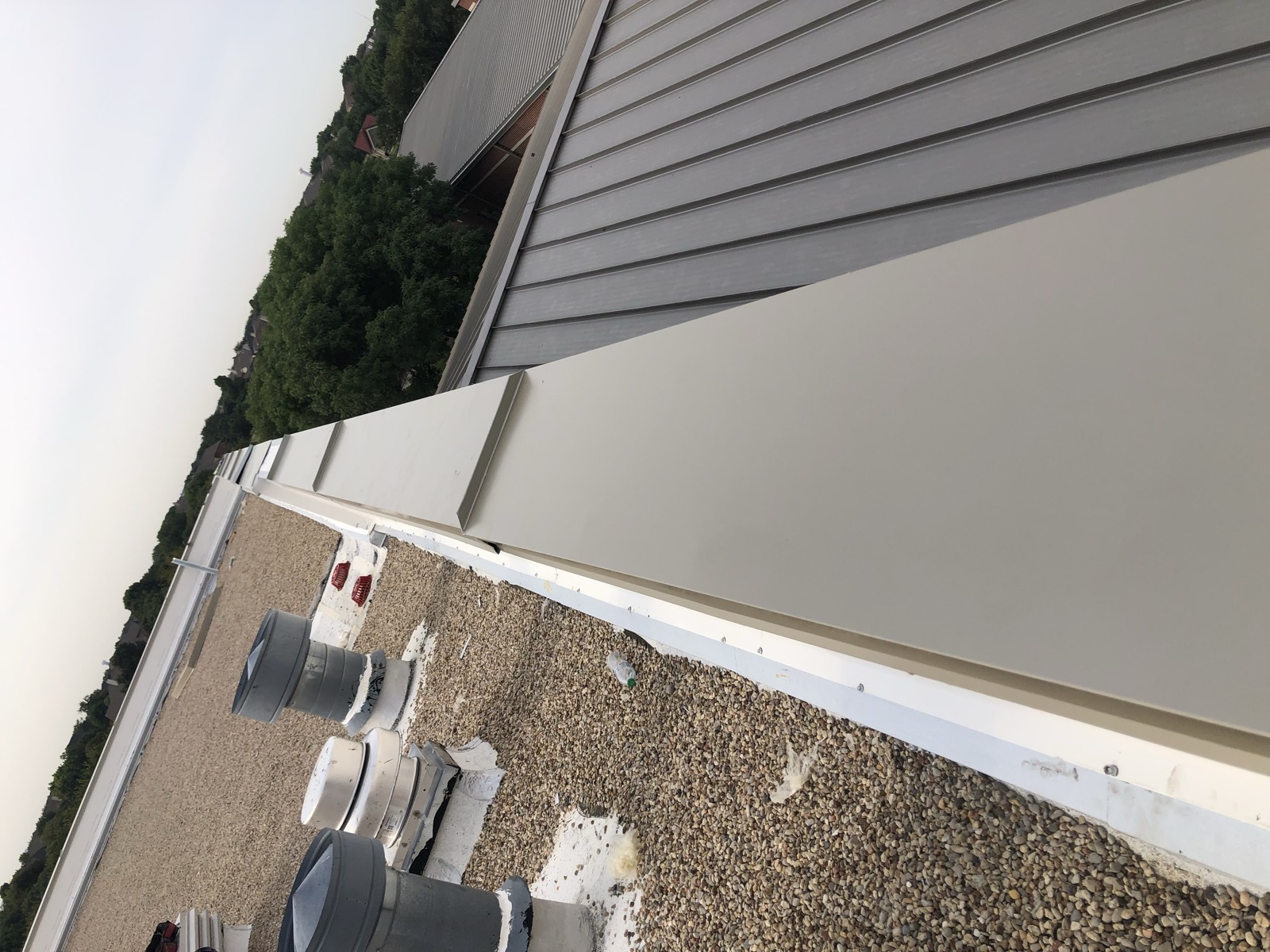
If you manage a commercial building in Central Texas and the flat roof needs to come off, you will hear two system names more than any other: TPO and modified bitumen. Both are legitimate flat roofing systems. Both have real applications in this climate. The choice matters and is not complicated once you understand what each system actually does and where each one fits.
What TPO Is
TPO stands for thermoplastic polyolefin. It is a single-ply membrane that is heat-welded at the seams to create a continuous waterproofing layer. The membrane is manufactured in white or light grey, which reflects solar radiation rather than absorbing it. On a Central Texas summer day, a white TPO membrane runs significantly cooler than a dark modified bitumen surface, which has implications for the HVAC load inside the building and for the long-term stress on the membrane itself.
TPO is the current standard for new commercial construction in this market. Walk any large commercial development built in the last decade in Round Rock, Cedar Park, or Austin and you will find TPO on most of the flat roofs. It installs faster than modified bitumen, the seams are mechanical welds rather than adhesive bonds, and it performs well in UV conditions when the membrane is specified at appropriate thickness for the application.
What Modified Bitumen Is
Modified bitumen is a two-ply system. The base sheet and cap sheet are asphalt-based, modified with either APP (atactic polypropylene) or SBS (styrene-butadiene-styrene) to improve flexibility and durability. It is installed by heat torch, hot mop, or cold adhesive depending on the product and the application. The resulting roof is thicker and more puncture-resistant than TPO at equivalent price points, and it tolerates foot traffic better.
Modified bitumen has been the dominant commercial flat roofing system in Texas for thirty years. A lot of the existing commercial building stock in the Austin metro runs mod bit. Contractors who have worked here a long time know how to install it correctly, which matters because the quality of modified bitumen installation varies significantly by crew skill.
“The commercial decision is rarely TPO versus mod bit in the abstract. It is what the building is used for, how much foot traffic the roof takes, and whether energy cost is on the table.”
How They Compare in Central Texas Conditions
- Heat performance. White TPO reflects heat. Dark mod bit absorbs it. In a 105-degree Texas summer, a black modified bitumen roof surface can reach 160 to 180 degrees. That thermal load accelerates seam and blister failures over time and pushes more heat into the building. If energy efficiency is a factor, TPO wins.
- Hail resistance. Modified bitumen’s two-ply construction is more puncture-resistant than standard TPO. If the building is in a hail-exposed location, 60-mil or 80-mil TPO provides better impact resistance than 45-mil, and modified bitumen at standard thickness provides better resistance than equivalent-price 45-mil TPO.
- Seam integrity over time. TPO heat-welded seams, when installed correctly, form a homogenous bond that is stronger than the membrane itself. Modified bitumen seams rely on torch adhesion or cold adhesive, both of which can fail if the installation was done in poor conditions or with inadequate overlap. TPO seam quality is more consistent across installation crews.
- Cost. At comparable thickness, TPO is generally less expensive to install than modified bitumen for new construction. For reroof work on existing mod bit, the tear-off cost applies to both systems. Modified bitumen can sometimes be recovered with a cap sheet rather than full tear-off, which changes the economics.
- Maintenance. Both systems require periodic inspection. Modified bitumen blistering is a more common maintenance issue in heat-intensive climates. TPO membrane separation at penetrations is a common TPO failure mode, particularly around HVAC equipment where foot traffic and mechanical work happen frequently.
Which One Is Right for Your Building
For new construction or full reroof on a building where energy costs matter and foot traffic is minimal: TPO in 60-mil or 80-mil thickness. For a building with a history of foot traffic, puncture concerns, or an existing mod bit system being recovered rather than replaced: modified bitumen is a reasonable choice. For a building with a large HVAC equipment field where service technicians work the roof regularly: either system can work, but the detail work around penetrations has to be correct regardless of which membrane you choose.
The honest answer is that a correctly installed version of either system will perform well in Central Texas. The installation quality matters more than the system choice. A badly installed TPO roof and a badly installed modified bitumen roof both fail the same way: at the seams and around penetrations. Call (432) 288-5562 or see our commercial roofing page and TPO roofing page for more detail.
Maintenance Differences Over Time
The two systems do not age the same way, and the upkeep schedule reflects that. A TPO roof asks for less hands-on maintenance through its early and middle years. The membrane field is reflective and holds up under UV without a recoating cycle, so the recurring task is an annual seam and penetration inspection rather than any kind of resurfacing. That seam check is not optional. TPO lives and dies at the heat-welded seams and at the flashing around HVAC curbs and pipe penetrations, and in a Central Texas equipment field where service technicians walk the roof regularly, those details are where the wear shows up. Catch a seam that is starting to lift at the annual inspection and it is a small weld repair. Miss it and water tracks under the membrane for a season before it shows at the ceiling.
Modified bitumen carries a different obligation. The granulated cap surface oxidizes under the Texas sun, and to get full service life out of a mod bit roof you generally need a reflective resurfacing coat applied every five to seven years in this heat, sometimes sooner on a south-facing or fully exposed roof. That coating cycle is a recurring cost TPO does not have, but mod bit’s payoff is its two-ply toughness underfoot, which is why it is still a sound choice on roofs that take a lot of traffic. The practical takeaway for a building owner budgeting across the Austin metro is straightforward: plan TPO around a yearly seam inspection and a long quiet stretch in between, and plan modified bitumen around that same yearly look plus a recoat line item every several years. Either way, the inspection is the part that protects the investment.
Need a condition assessment or replacement scope on a Central Texas commercial roof? Plenox Solutions serves Austin metro, Williamson County, and beyond.
Call (432) 288-5562 Get a Free AssessmentRecover vs Tear-Off on an Existing Mod Bit Roof
One decision that comes up constantly on older Austin-metro buildings is whether an existing modified bitumen roof can take a recover, a new membrane installed over the old one, or whether it needs a full tear-off. Code allows a maximum of two roof systems on most commercial buildings, so if the existing mod bit is already the second layer, the question answers itself. If it is the only layer, the deciding factor is moisture. We run a moisture survey before recommending a recover, because trapping wet insulation under a new membrane locks the problem into the assembly and the new roof fails from below. A dry deck with a sound, well-adhered existing system is a legitimate recover candidate, and the savings on tear-off, disposal, and schedule are real. A deck with saturated areas gets those sections cut out and replaced at minimum, and widespread saturation means tear-off regardless of what the budget wanted. Either system, TPO or a new mod bit cap, can go over a properly prepared recover. The survey is what keeps that decision honest.
A Note on Warranties
Manufacturer warranties on both TPO and modified bitumen systems typically cover material defects, not installation failures. A 20-year NDL (no-dollar-limit) manufacturer warranty requires an approved installer and specific installation documentation. Workmanship warranties from the contractor cover installation quality. We provide a lifetime workmanship warranty on every commercial project we complete, which covers the installation side of that equation. See our commercial roof inspections page and our project gallery for reference.