Standing-Seam Metal Roofs on Austin Rebuilds: Why It Keeps Winning
Plenox Solutions · Leander, TX · Roofing
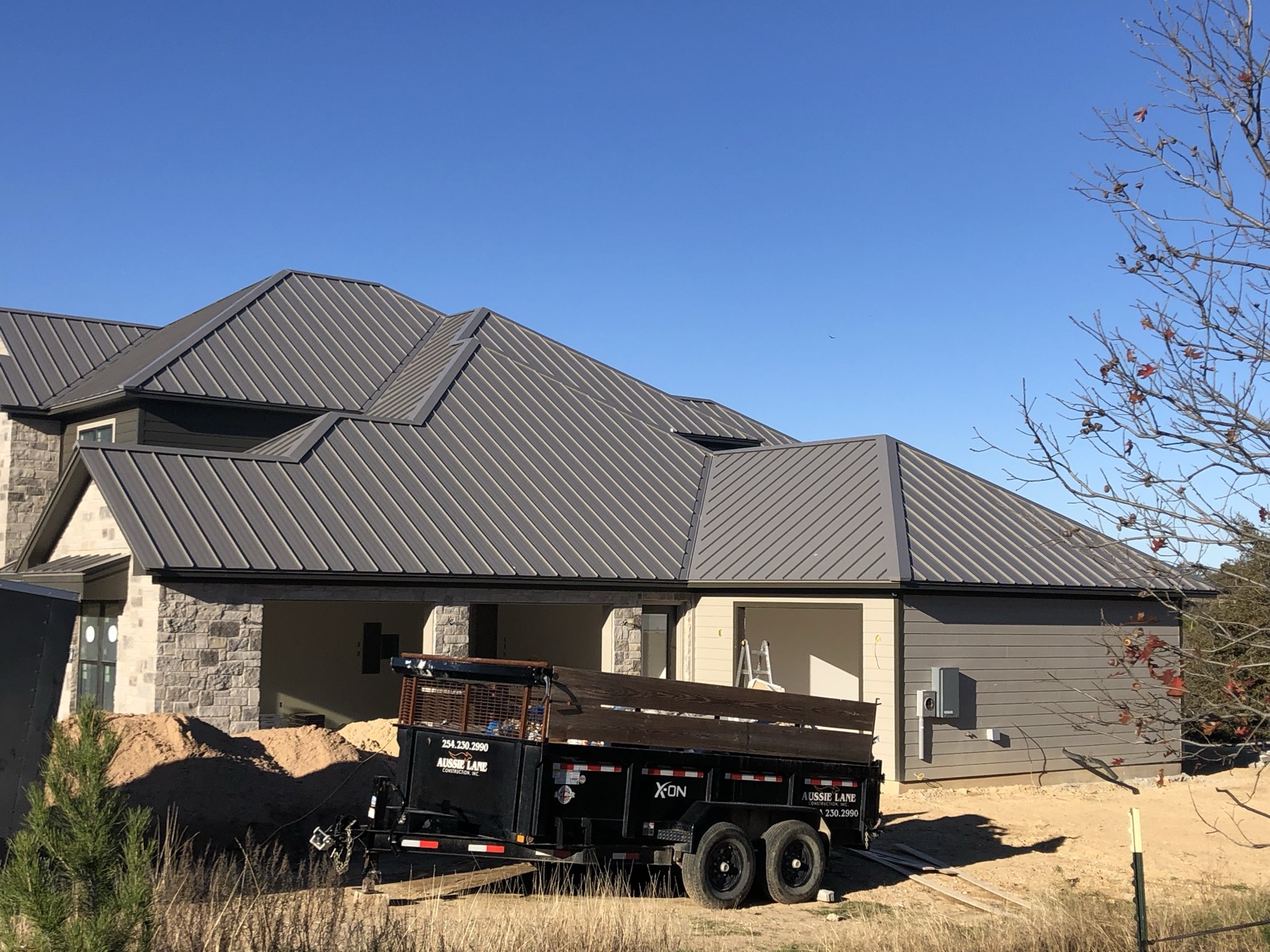
Drive the east-side blocks of Austin lately and you can watch the roofline of the neighborhood changing. As the older bungalows east of I-35 come down to the studs or get replaced outright, the roof going back on is more and more often standing-seam metal instead of shingle. The same thing is happening on the steep contemporary homes climbing the hills west of MoPac and out along the 360 corridor. It is not a fashion accident. Metal keeps winning on these projects because it fits both the architecture and the Central Texas climate in a way shingle does not, and once you understand what an Austin roof actually goes through in a year, the choice starts to make obvious sense. Here is why it keeps happening, and what separates a metal roof that lasts fifty years from one that becomes a problem in fifteen.
What an Austin Roof Endures in a Year
The case for metal starts with the weather. An Austin summer bakes a roof for months, and on a dark shingle surface the temperature runs far past what the air thermometer reads on a July afternoon. That heat soaks into the attic and cooks the asphalt mat of the shingle from both sides. Then the spring storm season pushes hail and straight-line wind across the metro, lifting shingle tabs and stripping the protective granules off the surface, with the north-side corridors along US-183 and MoPac usually taking it first. A standing-seam metal panel does not soften in the heat the way asphalt does, and it does not lose granules to hail because it has none to lose. Over the kind of decade most Austin homes see, that difference is the line between a roof still quietly doing its job and one that already needed replacing.
Why the Rebuilds in Particular
Metal shows up most on the rebuilds and the new contemporary construction for a couple of reasons beyond performance. The clean, flat planes of a standing-seam roof suit the modern lines of the homes going up in East Austin and on the west side, so the aesthetic fits where a traditional shingle would look out of place. And the owners driving those projects are often planning to stay in the house, which changes the math. When you are going to own the roof for decades, a system you can mostly leave alone is worth more than the lower up-front number of a roof you will maintain actively and eventually tear off and replace. Metal is a longer commitment that pays back over a long horizon, and the rebuild is exactly the moment that horizon is on the table.
“On an East Austin rebuild you are choosing a roof for the next few decades, not the next few years. That is the situation metal was made for.”
Standing Seam vs Exposed Fastener
Not all metal roofing is the same, and the distinction matters. A standing-seam system uses concealed fasteners: the panels lock together at raised seams and there are no screws exposed out in the metal field. That is the high-performing residential system, and it is what most of the Austin rebuilds call for, because there are no exposed screw penetrations sitting in the UV waiting for their rubber washers to degrade. An exposed-fastener panel is the cheaper cousin, screwed down through the face of the metal, and it has its place on agricultural buildings, some commercial structures, and secondary buildings. The trade-off is those exposed fasteners, which are sealed at install but need periodic inspection to stay tight over the years. For a house you plan to keep, standing seam is almost always the right answer, and it is what we recommend when the budget and the structure support it. Our full metal roofing page walks through both systems in more detail.
The Install Is What Actually Decides Lifespan
Here is the part that gets skipped in the sales conversation and matters more than any brochure: a metal roof is only as good as the crew that installs it, and metal is less forgiving of a bad install than shingle is. The specific detail that separates a fifty-year roof from a fifteen-year problem is how the roof handles movement. Steel expands and contracts with temperature, and Central Texas swings roof-surface temperatures more than a hundred degrees between a January night and a July afternoon. Panels have to be sized and clipped so they can move freely as they heat and cool. Flashing at hips, valleys, and penetrations has to accommodate that movement rather than pinning the metal in place. And the trim at the eaves and rakes has to be formed correctly instead of face-screwed wherever it was convenient. Get that movement handling wrong and the roof works against itself: fasteners loosen, seams stress, and leaks start at the details even though the flat panels look fine.
This is exactly why the bad metal roofs in the Austin market tend to come from crews that mostly do shingles and take the occasional metal job. Metal is a different craft with different rules, and a shingle installer improvising a standing-seam roof will usually get the movement handling wrong in ways that do not show up for a few years. When you are hiring for a metal roof, the questions worth asking are about the crew’s metal experience and how they detail for thermal movement, not about the color chart.
Ventilation: The Part Nobody Asks About
The other thing that quietly decides how long an Austin metal roof lasts is attic ventilation, and it is the part homeowners almost never think to ask about. A roof over a poorly vented attic bakes itself from below no matter what it is made of. On a metal roof, a starved attic drives the daily temperature swing that stresses every seam and clip, and it can take a system that should perform for forty-plus years and start problems at the details well before the metal itself wears out. We are Lomanco-certified in ventilation design, which means we balance intake and exhaust as part of the job rather than assuming the existing setup was done right. On every metal roof we build in Austin, the ventilation gets checked and corrected, because a beautiful new metal roof over a trapped, overheated attic is not the win it looks like.
Reading a Roof by Its Neighborhood
One thing that gets lost in the brochure version of metal roofing is that the right spec is not the same across Austin. A metal roof that is correct for a low, simple East Austin rebuild is not automatically correct for a steep two-story out toward the 360 corridor, and pretending otherwise is how crews end up leaving problems at the details. The mature live oaks over the older central and east-side blocks drop limbs in a wind event and hold moisture against the roof in the shaded sections, so on those homes the panel choice and the flashing details have to account for debris and for damp that lingers where the sun does not reach. Those are the roofs where the transitions and the low-slope tie-ins get watched closely, because that is where trapped moisture starts trouble on any roof, metal included.
The taller, more cut-up rooflines on the newer west-side and far-north homes are a different problem. They carry more valleys, hips, dormers, and penetrations, and every one of those is a place where water concentrates and where a careless crew leaves a future leak. On a roof like that the flat panels are the easy part; the craft is entirely in how the metal is detailed at the transitions and how it is allowed to move through the Central Texas thermal swing. This is why we read the actual roof before we settle on a panel profile or a fastening pattern, its orientation, its slope, the trees over it, its ventilation, rather than quoting one system for every house in the metro. A roof that has been read honestly gets a spec that fits it, and that fit is a good part of why one metal roof lasts decades while another starts leaking at the valleys in a few years.
What This Means If You Are Considering Metal
If you are rebuilding or reroofing an Austin home and metal is on the table, the decision comes down to how long you plan to own the house and whether the up-front commitment fits your plans. For a homeowner staying long-term, particularly on a rebuild where the architecture suits it, standing-seam metal is a roof you install once and mostly forget, and in a climate this hard on shingles that is worth a great deal. What matters most is not the panel brand but the crew: whether they know metal, whether they detail for the Central Texas thermal swing, and whether they treat ventilation as part of the roof instead of an afterthought. We install metal across Austin and the surrounding Travis County cities out of our shop in Leander, we give straight recommendations based on your specific roof and your timeline, and every job carries a lifetime workmanship warranty plus six years of included annual weatherproofing. See finished Central Texas roofs in our project gallery.
Rebuilding or reroofing in Austin and weighing metal? We will walk your roof, read it straight, and tell you whether standing seam is the right call for the house and the timeline. Weatherproof your roof for the long haul. Call (432) 288-5562 or see our metal roofing page.
Call (432) 288-5562 Get a Free Review