
Metal Roofing in Austin
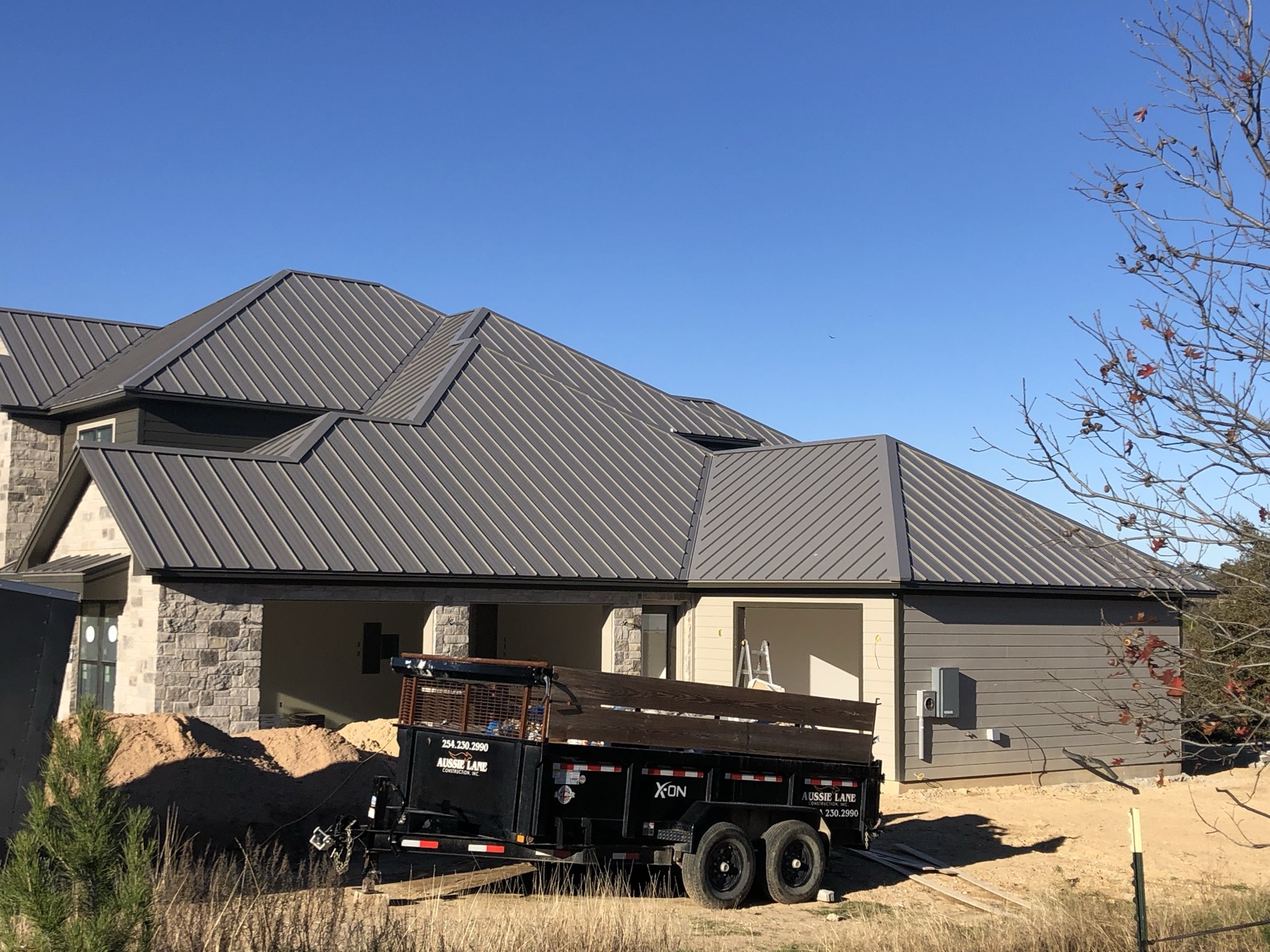
Standing-seam and metal panel roofing installed by a licensed and insured, OSHA-certified crew. It is the roof going on more and more of the East Austin rebuilds and the steep west-side homes, and it comes with a lifetime workmanship warranty and six years of included weatherproofing.
Why Metal Keeps Showing Up on Austin Roofs
Metal has quietly become the roof of choice on a whole class of Austin projects, and the East Austin rebuilds are where we see it most. As the older bungalow blocks east of I-35 get taken down to the studs or replaced outright, standing-seam panels are going up in place of shingle because the look fits the modern architecture and the performance fits the climate. We see the same on the steep, contemporary homes climbing the hills west of MoPac and out toward the 360 corridor, where owners planning to stay want a roof they can mostly leave alone. A properly installed standing-seam metal roof sheds water faster, resists wind uplift at higher speeds, handles the daily thermal swing of a Central Texas summer, and carries a functional lifespan measured in decades. When hail rolls across the metro it takes the hit without losing granules or integrity the way a shingle does, because there are no granules to lose.
What We Install Across Austin
Our metal roofing work in Austin covers standing-seam and exposed-fastener panel systems for homes, small commercial buildings, and light industrial structures. The right system depends on the building, the budget, and any HOA or historic-district rules that apply, and we walk the options at the assessment and give a straight recommendation for the specific roof in front of us.
- Standing seam. Concealed-fastener system with no exposed penetrations out in the metal field. The highest-performing residential metal roof, and the one most of the East Austin and west-side installs call for.
- Exposed-fastener metal panels. Lower installed cost. A fit for agricultural, commercial, and secondary structures. The fasteners are sealed at install, and periodic inspection keeps them tight.
- Metal over existing shingles. On some Austin structures, metal can go over an existing shingle layer and cut tear-off cost. We assess whether the decking and the assembly actually support that before we recommend it.
What the Austin Climate Does to a Roof
The case for metal comes down to what an Austin roof actually endures over a year. Summer afternoons push the surface temperature of a dark shingle roof far past what the thermometer reads, and that heat soaks into the attic and bakes the asphalt mat from both sides. Then the spring storm season pushes hail and straight-line wind across Travis County, lifting shingle tabs and stripping granules through the north Austin corridors first. A standing-seam panel does not soften in the heat the way asphalt does, and it does not surrender granules to hail because it has none. Over the decade most Austin homes see, that difference is the line between a roof still doing its job and one that already needed replacing.
Neighborhood shapes the spec. The mature live oaks over the older central and east-side blocks drop limbs in a wind event and hold moisture against the roof in the shaded sections, so panel choice and flashing detail have to account for debris and damp. The taller, more complex rooflines on the newer west-side and far-north homes carry more valleys, hips, and penetrations, which means more flashing details where any roof leaks first. We read the actual roof, its orientation, its slope, the trees over it, its ventilation, before we settle on a panel profile or a fastening pattern. A metal spec that is right for a low East Austin rebuild is not automatically right for a steep two-story out near the 360.
Attic ventilation is the part most homeowners never think about and the part that quietly decides how long the roof lasts. We are Lomanco-certified in ventilation design, which means we balance intake and exhaust so the attic is not trapping heat and driving the temperature swing that stresses every seam and clip. On an Austin metal roof that balance is the difference between a system that performs for forty-plus years and one that develops trouble at the details long before the metal itself wears out. We check the ventilation on every job rather than assuming the last crew got it right.
The Install Is What Decides the Lifespan
The numbers on a metal roof only hold up if the roof is installed by a crew that actually knows metal, and that is where the Austin market gets uneven. Metal is far less forgiving of a bad install than shingle, and the detail that separates a roof that lasts decades from one that leaks in a few years is how it handles movement. Steel expands and contracts with temperature, and a Central Texas roof surface can swing more than a hundred degrees between a January night and a July afternoon. The panels have to be sized and clipped so they slide freely as they heat and cool, the flashing at hips, valleys, and penetrations has to accommodate that movement instead of pinning the metal down, and the trim at the eaves and rakes has to be formed correctly rather than face-screwed wherever it was quick. Get the movement handling wrong and the roof works against itself, loosening fasteners and stressing seams until leaks start at the details even though the flat panels still look fine from the street.
This is exactly why the metal roofs that go bad in Austin usually come from crews that mostly hang shingles and take the occasional metal job. Standing seam is a different craft with different rules, and a shingle installer improvising his way through one tends to get the thermal-movement details wrong in ways that do not surface for a couple of years, long after the check has cleared. When you are hiring for a metal roof, the questions worth asking are about the crew’s metal experience and how they detail for the Austin thermal swing, not about the color chart. On the steep, cut-up rooflines out toward the 360 corridor, where a roof carries more valleys, hips, and penetrations than a simple East Austin rebuild, that install discipline matters even more, because every one of those transitions is a place a careless crew leaves a future leak.
The Plenox Approach
We are not trying to make a quick nickel off homeowners. The goal is a roof that performs for decades and a relationship where you call us first when something comes up. Every job carries a lifetime workmanship warranty, and we come back once a year for six years to do the included weatherproofing. That kind of follow-through is uncommon in this trade, and it matters in Austin’s climate. See our full metal roofing page and our completed projects. For storm damage, see our storm restoration service. Call (432) 288-5562 or contact us for a free roof review.
Austin Metal Roofing FAQ
How long does a metal roof last in the Austin area?
A properly installed metal roof in Central Texas should run 40 to 70 years with minimal upkeep. The factors that decide where you land in that range are material quality, install quality, and attic ventilation. A starved attic accelerates thermal stress at the fastener and clip points, which is why we build a ventilation assessment into every Austin metal job.
Does metal roofing hold up to Austin hail?
Yes. Metal stands up to hail far better than asphalt shingles. Shingles lose granules on impact and expose the asphalt to UV, while metal panels absorb the hit without losing material integrity. Very large hail can dent a panel cosmetically without compromising the roof’s ability to keep water out, which is a different situation than a shingle that has been bruised through.
Is a metal roof louder in the rain?
Not when the job is done right. Metal installed over solid decking with an appropriate underlayment is not noticeably louder than other roof types. The “loud in the rain” reputation comes from bare metal panels screwed straight to open framing on barns and sheds, a completely different assembly than a residential standing-seam roof over decking.
Will an Austin HOA or historic district limit my metal roofing options?
Some Austin HOAs restrict exposed-fastener panels on appearance, and a few of the central historic districts have their own review, but standing-seam metal is generally accepted in most communities because its profile reads close to traditional roofing. Check your covenants or your district guidelines, or ask us, since we work across Austin and know the common local requirements. Call (432) 288-5562.
Do you serve all of Austin for metal roofing?
Yes. We cover Central Austin, East Austin, South Austin, and the north and west sides, plus the surrounding Travis County cities, out of our shop in Leander. For a storm-driven metal reroof after a hail or wind event, call (432) 288-5562 directly, or reach us through our contact page.
Why do some Austin metal roofs fail early?
Almost always the install, not the material. Metal is less forgiving than shingle, and the roofs that go bad usually come from crews that mostly hang shingles and take the occasional metal job. The detail they get wrong is thermal movement: a Central Texas roof surface swings more than a hundred degrees across the year, and the panels, clips, flashing, and trim all have to let the metal slide freely as it heats and cools. Pin it down and the roof works against itself, loosening fasteners and stressing seams until leaks start at the details. On steep, cut-up rooflines with lots of valleys and penetrations, that install discipline matters even more.
Metal Roofing in Austin
Licensed, OSHA-certified, lifetime warranty. Call or request a free roof review.