7 Warning Signs Your Georgetown Commercial Flat Roof Is Failing
Plenox Solutions | Leander, TX | Commercial roofing contractor serving Georgetown and Williamson County

A commercial flat roof rarely fails all at once. It sends warning signs for months, sometimes years, before it lets water into the building. The problem is that the roof is out of sight, so those warnings go unnoticed until a ceiling tile stains or a leak drips onto inventory. If you own or manage a Georgetown building, here are the seven signs that your flat roof needs attention before it becomes an emergency.
1. Standing Water That Does Not Drain
The single most important thing to watch for is ponding: water that sits on the roof more than 48 hours after rain. A flat roof should drain, and when it does not, it usually means the roof lacks slope, a drain is clogged, or a drain was set too high. Standing water is the number one killer of commercial roofs in Central Texas. It accelerates membrane breakdown, adds structural load, and finds every weak seam. If you can see dark stained rings on the roof surface where water repeatedly pools, that is ponding, and it needs to be corrected.
2. Blisters and Bubbles in the Membrane
Blisters are pockets of trapped air or moisture that push up under the membrane surface. Under the Central Texas sun they expand and contract with the heat cycle until they crack open, and a cracked blister is a direct path for water. A few small blisters are worth monitoring; widespread blistering across the roof is a sign the membrane is breaking down and needs a professional assessment.
“On a flat roof, the leak almost never shows up where the water gets in. By the time you see a stain inside, the damage on the roof has been growing for a while.”
3. Seam Separation
The seams where sections of membrane join are the most vulnerable part of any flat roof. Over years of thermal cycling in Georgetown’s heat, seams that were welded or sealed at installation can pull apart. If you see any lifting, gaps, or loose edges along the seam lines, water has a way in. Seam failure is one of the most common sources of commercial leaks we find.
4. Cracked or Failed Flashing at Penetrations
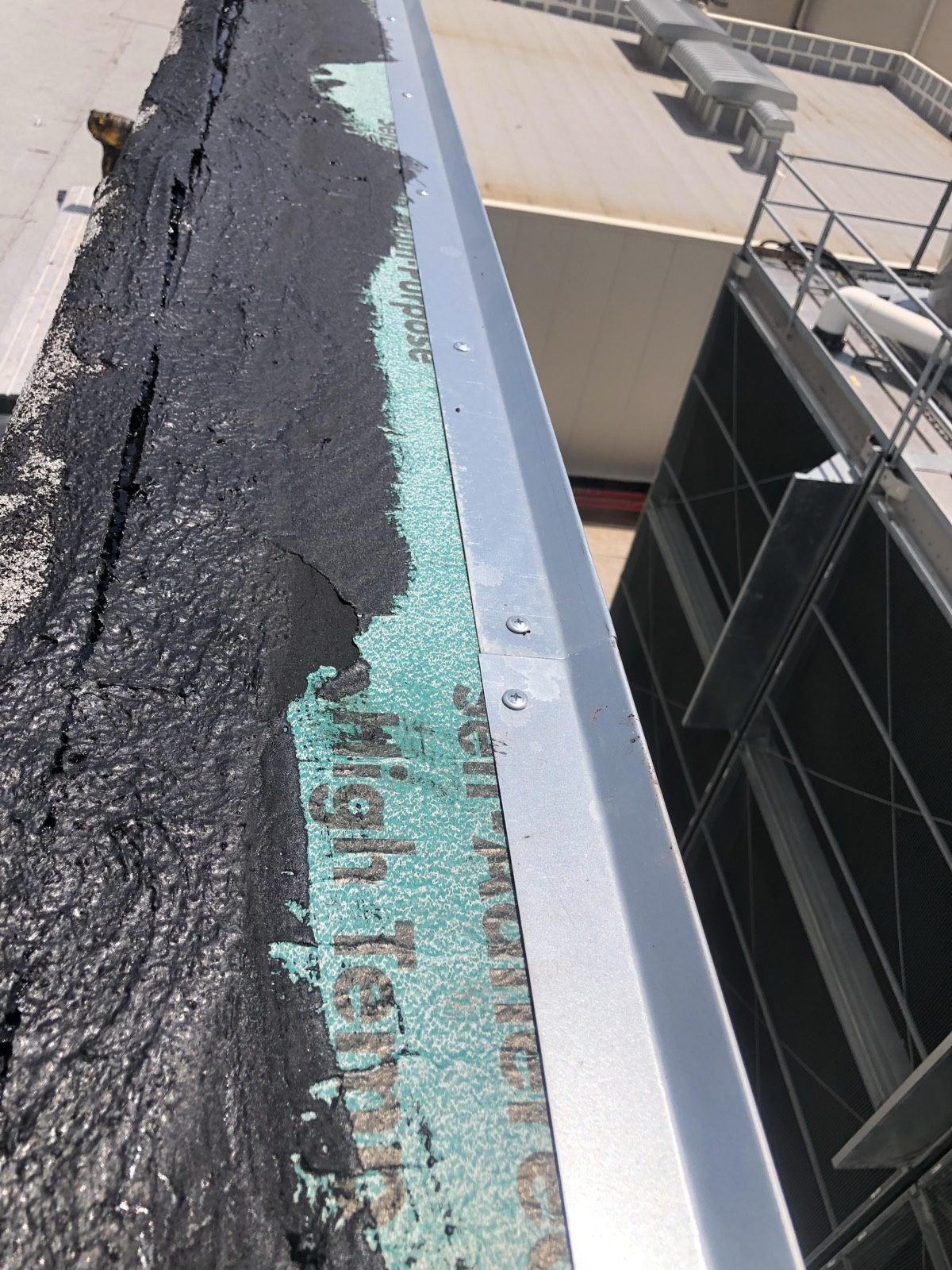
Every HVAC unit, vent stack, pipe, and conduit that comes through the roof is a penetration, and every penetration is sealed with flashing. Those seals are where most commercial leaks actually start. On a Georgetown building with a lot of rooftop equipment, the details at those penetrations matter more than the field of the roof. Cracked, lifted, or dried-out flashing around any rooftop unit is a red flag.
5. Interior Stains and Ceiling Damage
This is the sign most owners actually notice, and by the time they do, the roof problem is well established. A water stain on a ceiling tile or a discolored ring on drywall means water is already getting through. The tricky part is that on a flat roof the leak entry point is almost never directly above the interior stain. Water enters at a failed seam or penetration, tracks along the deck or structure, and shows up somewhere else entirely. A repair aimed at the stain instead of the source fixes nothing.
6. Rising Energy Bills
A less obvious sign is a cooling bill that keeps climbing. A flat roof with a degraded or non-reflective membrane absorbs and holds heat, driving up the load on the building’s cooling system in the Central Texas summer. If your energy costs are creeping up and the roof is aging, the membrane may be part of the reason, and a reflective replacement like a TPO system can help.
7. Granules or Debris in the Drains
On modified bitumen and some built-up roofs, granule loss shows up as grit collecting at the drains and scuppers, the same way a shingle roof sheds into the gutters. Finding that grit means the surface is wearing. Combined with any of the other signs, it points to a roof that is nearing the end of its useful life.
Seeing any of these signs on your Georgetown commercial roof? Plenox Solutions provides flat-roof inspections and repairs, and inspection programs that catch problems before they become interior damage.
Call (432) 288-5562 Free Roof AssessmentCatch It Early or Pay for It Later
Every one of these signs is cheaper to fix early than to let run. Ponding corrected before it destroys the membrane, a seam re-welded before it lets water into the building, flashing resealed before it soaks the deck: these are small jobs compared to an interior repair and a section of failed roof. For Georgetown property managers, a scheduled inspection program catches these problems while they are still cheap. See our commercial roofing in Georgetown page, our main commercial roofing page, our roof inspections page, and the areas we serve across Williamson County. Contact us for a free roof assessment.
Georgetown Commercial Flat Roof FAQ
What is ponding and why is it so serious?
Ponding is water that stays on a flat roof more than 48 hours after rain because the roof lacks slope or a drain is clogged or set too high. It accelerates membrane breakdown, adds structural load, and finds every weak seam. It is the number one cause of premature flat-roof failure in Central Texas.
Why does my roof leak somewhere different from the interior stain?
On a flat roof, water enters at a failed seam or penetration, tracks along the deck or structure, and appears as a ceiling stain elsewhere. That is why patching the spot under the stain rarely works. We trace the leak to its actual entry point and fix the membrane and flashing there.
How often should a Georgetown commercial roof be inspected?
At least twice a year, plus after any major storm, is a reasonable baseline. Scheduled inspections catch ponding, seam separation, and flashing failure while they are still cheap to fix. For property managers with multiple buildings, a regular program is far cheaper than emergency leak repairs.
Can you repair my flat roof without shutting down the business?
In most cases, yes. We schedule commercial work around your operations and stage the job so the building stays usable. We walk through the plan and timeline before starting so there are no surprises for your staff or customers.
Is it better to repair or replace an aging flat roof?
It depends on how much of the roof is compromised. Localized failures often justify a targeted repair. If the membrane is widely blistered, seams are failing across the roof, and ponding has been running for years, a replacement is the honest answer. We give you the real assessment. Call (432) 288-5562.