Hail Ran the 130 Corridor Again. Here Is How to Check Your Roof Without Climbing It
Plenox Solutions | Leander, TX | Roofing contractor serving Pflugerville and the SH-130 corridor
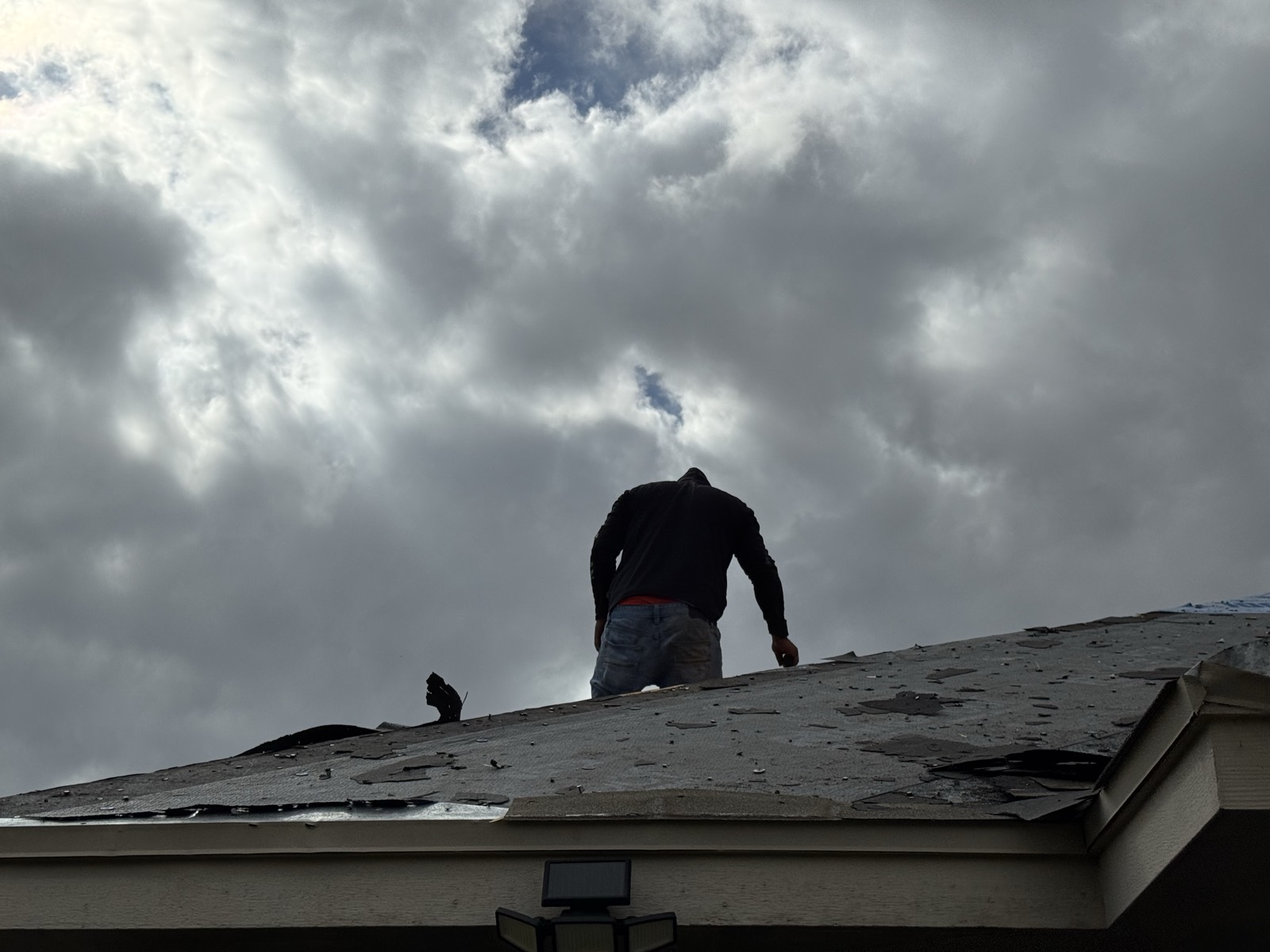
Somewhere between April and June, a line drops out of the north and runs the 130 corridor. Pflugerville sits low and open on the blackland prairie edge with almost nothing between the city and the sky, so when a cell decides to ride that lane it hits a lot of houses in a hurry. Some years it is pea-sized and everybody forgets by Friday. Other years it works over every shingle on a street in about twenty minutes.
The morning after, people want to know one thing: did my roof take it, or did the storm belong to the neighborhood two exits down? You can answer most of that from your own yard. Here is how we tell homeowners to look, and why we would rather you stay on the ground while you do it.
Stay Off the Roof. Seriously.
Wet asphalt granules act like ball bearings, and a 5:12 slope that feels fine in October will put you in the hedge in May. Beyond falling, walking a hail-hit roof before anybody has documented it scuffs the very evidence a carrier looks for. Footprints and fresh bruising are hard to tell apart in a photo. Everything worth knowing in the first day is visible from the ground anyway.
Start at the Downspouts
Go stand where your downspouts discharge. Hail knocks granules loose from the shingle surface, rain carries them into the gutter, and the gutter dumps them at the splash block. A dark, gritty pile that looks like coarse sand is the plainest sign your roof took real impact. A few granules is normal on any roof of any age. A visible wash of them right after a storm is not.
While you are down there, look up at the gutter faces and the aluminum drip edge. Those are soft metals, and soft metals are honest. Round dents with the paint disturbed at the center mean the stones were big enough and fast enough to do harm.
The Rest of the Ground-Level Walk
Do a slow lap around the house and read the things that dent before shingles do. This takes ten minutes and tells us a lot before we ever pull up.
- The AC condenser. Bent or flattened fins on the outdoor unit are the single best hail gauge on a property. They dent at a smaller stone size than a shingle bruises at.
- Window screens. Look for torn mesh or a dished, pushed-in look on the north and west faces, which take the brunt out here.
- Painted and metal surfaces. Garage door panels, mailbox, grill lid, vent hoods, the shed roof. Fresh bright dents on any of them mean impact energy.
- The ground itself. Shredded leaves under the trees, stripped mulch, and dinged fence caps all record a storm that hit hard even if you slept through it.
Then get inside and look up. Take a flashlight into the attic if you can reach it safely and check the underside of the decking for daylight or fresh damp streaks, and glance at the top-floor ceilings for staining that was not there last week. Photograph anything you find while the date stamp is fresh.
“If the fins on the AC are dented and the splash block is full of grit, the roof took it too. Those two things together are worth a real look.”
What Hail Actually Does Up There
Here is the part that catches people. Hail rarely punches a hole. It bruises the asphalt mat under the granules, leaving a round mark with the surface knocked bare at the center. Your roof does not leak that afternoon. It does not leak that year. But the sun now has a bare spot to work on, and that spot wears through faster than everything around it. Two or three springs later you get a drip over the hallway, long after the filing window on that storm has closed.
That delay is the whole reason we push people to look now instead of waiting for water. A roof that is quietly bruised across every slope looks completely normal from the street. The damage is real, it is documentable today, and it is invisible to a casual glance for years.
Why One Storm Ages a Whole Street Here
The production builds around Falcon Pointe, Blackhawk, and Avalon went up fast and close together, which means whole streets are wearing the same shingle from the same era with the same amount of Texas sun on it. One cell tracks through and ages the entire block at once. That is the honest reason half the street sprouts yard signs the same week.
It also means your neighbor’s outcome is not your answer. Roof pitch, orientation, tree cover, and the stone size that fell over your particular lot all vary within a block. The older streets near Pecan have mature canopy that shelters some slopes and drops limbs on others. We have inspected two houses across the street from each other where one needed full restoration and the other needed nothing at all. So we tell you what is on your slopes, not what we wrote up next door.
Plenox Solutions covers Pflugerville, Hutto, Round Rock, and the SH-130 corridor from our shop in Leander. If your ground check turned up granules or dented metal, we will come read the roof and tell you straight what is up there.
Call (432) 288-5562 Book a Free Roof ReviewAbout the Trucks Working the Block
Within about three days of any real hail here, the door-knockers arrive with out-of-state plates and a confident story about how the whole neighborhood is getting a new roof. Some will offer to cover your deductible. In Texas that is insurance fraud, and an outfit willing to do it is planning to pad the claim or cut corners on your decking. They will also be four states away by the time your first leak shows. We are twenty-five minutes west and we work this town year round, so we are still answering the phone after the job closes.
When to Have Somebody Come Out
If your ground walk turned up granule wash plus dented soft metals, get a professional look at it. If it turned up nothing at all, the storm probably missed you and there is no reason to file anything. Either answer is useful, and we will give you whichever one is true.
What an honest inspection looks like: a drone pass to record every slope before anyone steps on it, soft metals checked first because they establish stone size, chalked test squares on each slope so bruising is counted as a density instead of one dramatic photo, and an attic check for moisture a surface look would miss. You get the photos whether or not there is a claim in it. If your roof is fine, we say so and leave, and you owe us nothing.
We wanted to do it the right way instead of trying to make a quick nickel off of homeowners. That is easier to hold to when the inspection is free and the answer is allowed to be no. Read more about how we handle a storm from first tarp through final shingle on our Pflugerville storm restoration page, or look through finished work in the gallery. When you are ready for eyes on it, book a free roof review and we will get out there.